

Sub-Total: $0.00


Your engine can’t do the horsepower-producing, tyre-frying things we all enjoy unless there’s something to turn its pistons’ reciprocal energy into rotational energy through the crankshaft and then into the drivetrain. That’s where the connecting rod comes in. On paper, a conrod’s job is wildly simple, but there’s a tonne of science behind how they’re made and what specific rod your engine needs to work at its best.
First published in the August 2026 issue of Street Machine

As the name suggests, the connecting rod’s job is to connect the piston to the crankshaft, with each rod’s pin journal (small end) and crank journal (big end) using specifically sized bearings to hold a film of oil to keep the rotating ends well lubricated. They’re fitted to the crank using a bolted cap, with the small end joined to the piston’s gudgeon pin.

As conrods have to spin at thousands of rpm inside the cylinder walls, any rod failure will be catastrophic for your engine. So, to save you heartache and needless expense, picking the right conrod for your combo is of utmost importance. That’s why we talked to John Pilla from Powerhouse Engines in Melbourne to find out more about the engineering behind the humble conrod.
DESIGN
These days, there are two basic conrod designs: I-beam and H-beam. The cross-section of an H-beam conrod resembles a capital H, with wide sides and a narrow centre bridge, while an I-beam cross-section looks like a serif-font capital I.

“As for which is stronger between an H-beam and an I-beam, there is huge conjecture,” says John. “Realistically, it will come down to the particular engine combo and how it is being used. It also depends on what is available from manufacturers, and if they offer an H-beam rod [in a suitable material and design].”

However, whether you’re talking H-beams or I-beams, upgrading the rods for a given combo is a foundationally important part of any engine build. “In most modern engines, be it an RB, LS, or any late-model Ford, the crank can handle the power we’re making, so the first thing we look at is a piston and rod combo,” says John. “For lower power levels, you can typically get away with a good-quality off-the-shelf H-beam, and there are some excellent H-beams out there. The biggest factor is the quality of the product: you wouldn’t put a $1500 rod in a $100,000 engine, would you?
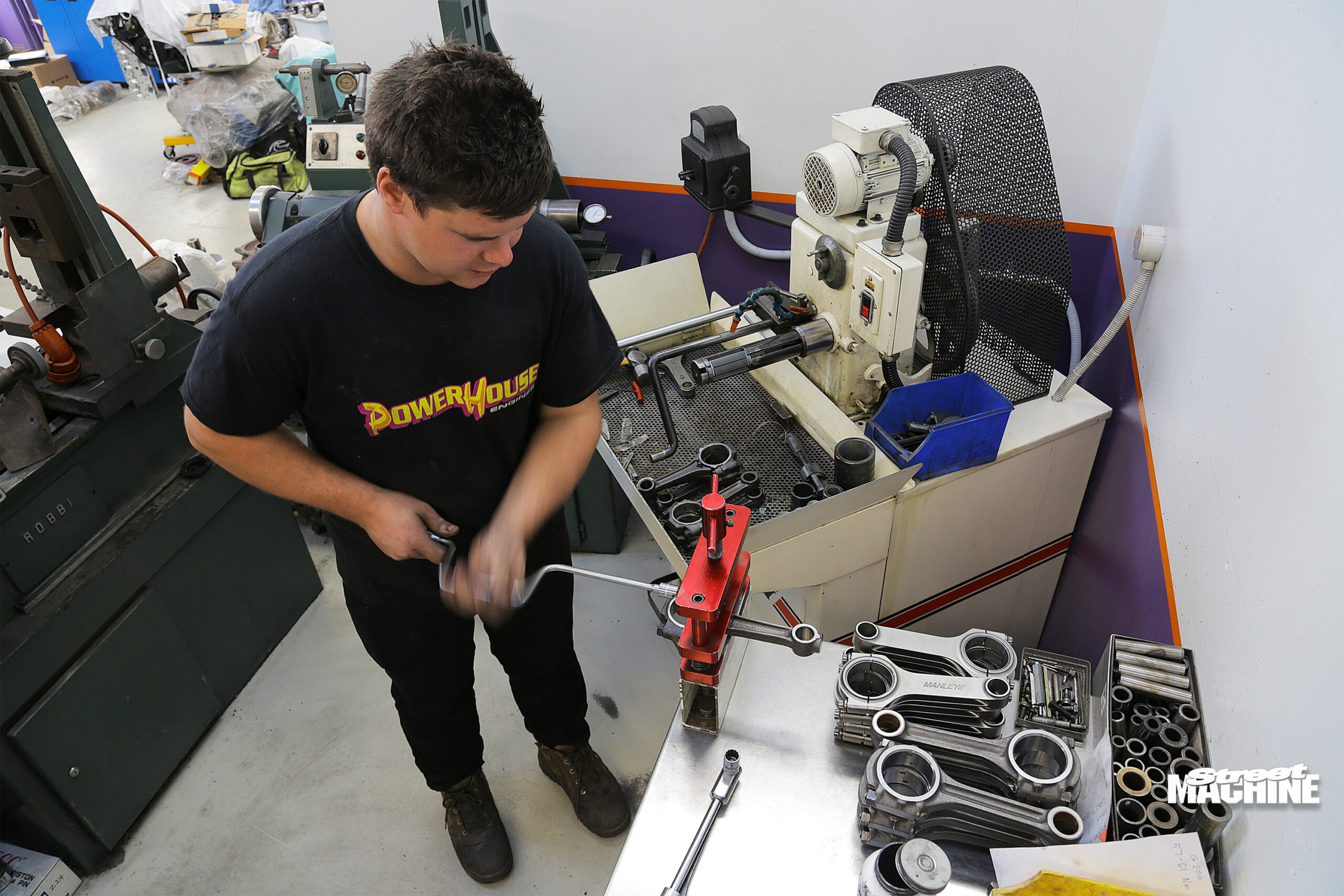
“Personally, I’m a bit of an H-beam man, but I used Oliver I-beams when I was building a lot of the pro burnout engines, like for Steven Loader and Peter Grmusa.”
ALLOY RODS
Billet aluminium rods are the King Fancy option for combos that have mega-power or operate under the most extreme conditions. Normally offered in I-beam design, they’re machined from a single billet of the strongest metal for the target weight – typically 7075-T6 aluminium, although 4340/H11 steel has been used as well.
On average, a billet aluminium rod will be 150-180g lighter than a steel one – a huge weight saving. This will help an engine rev much harder and reduce the parasitic losses of spinning heavier steel rods, and the ductility of an aluminium rod will also allow it to handle detonation better than a cheap steel one.
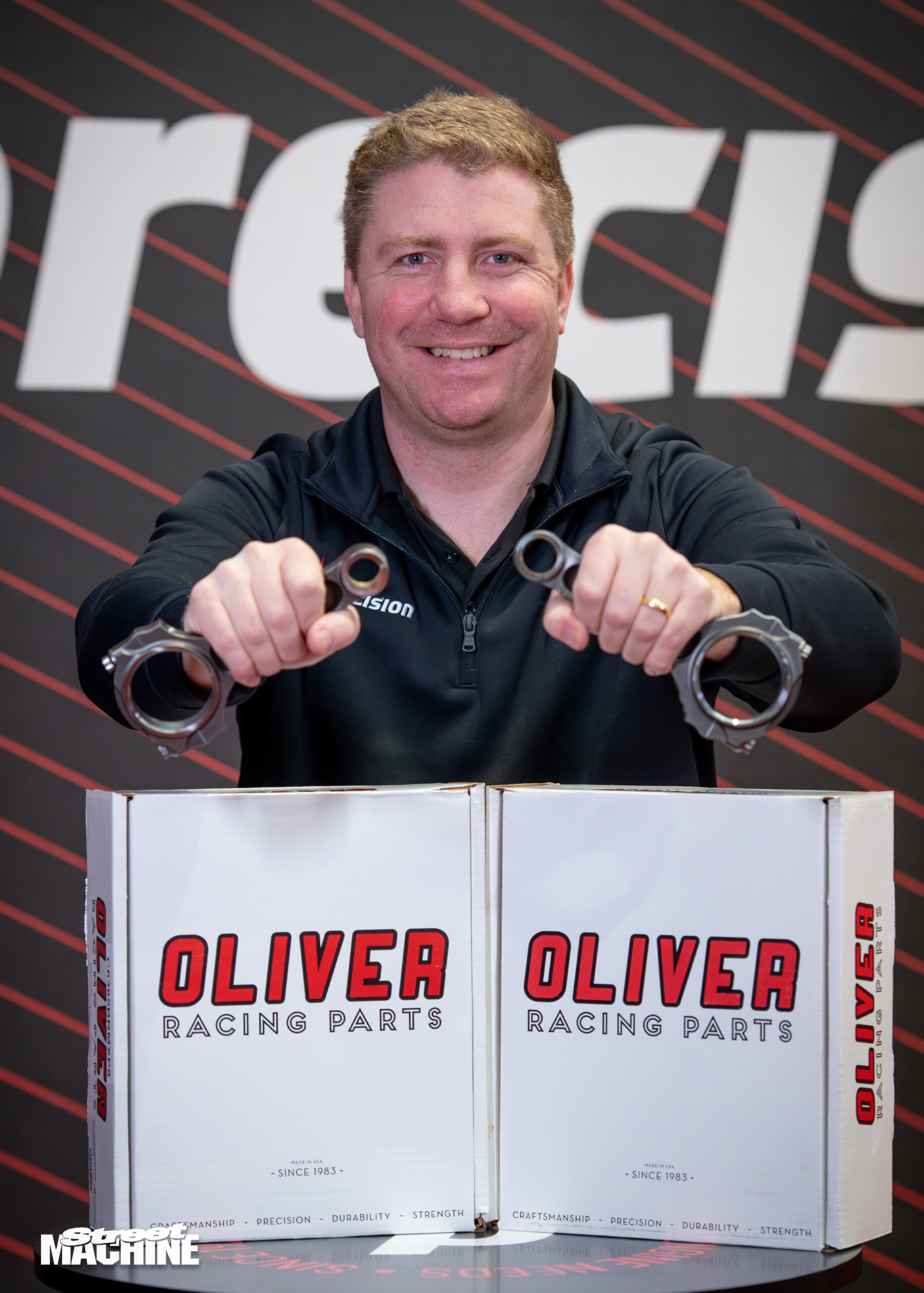
However, due to the cost of the base material and then precision-machining it, these rods are incredibly expensive. In addition, an aluminium rod is much larger than a steel one due to aluminium’s lower material density, which can cause issues for stroker combos where space is already tight.
Aluminium’s malleable nature also means these rods can weaken over time and have a far shorter life than a quality forged steel rod, so they’re not ideal for use in street cars doing the weekly shopping run. They’re better suited to max-effort engines that occasionally see road use.
MATERIALS
As conrods move in an oscillating motion between the spinning crank and rocking piston, managing the reciprocating mass of the rod is where a lot of the engineering wizardry happens. Metallurgy – the science of metals at a molecular level – comes into play with conrods, as material choice is paramount.
“The power and rpm today’s engines make test everything on the metal side of the components,” says John. “What used to be 9:1 compression is now over 11:1, and we’re turning them harder and running bigger cams. There’s a huge difference between what rod you’d put in an 8:1-comp boosted combo you turn to 8000rpm and a 13:1-comp aspirated engine pushing 10,000rpm on race fuel.”
While conrods used to be one of the very first parts replaced in any mild engine combo, improvements in design and modern metals mean some modern cast rods can handle up to 1000hp – more than double what you’d expect from a regular production rod in the 80s. Today’s cast rods aren’t made via the traditional casting process of pouring molten liquid into a mould, which is how cast metals used to be produced. Instead, they’re sintered using powdered metal that is pressurised and heated, and John advises caution before trusting them.
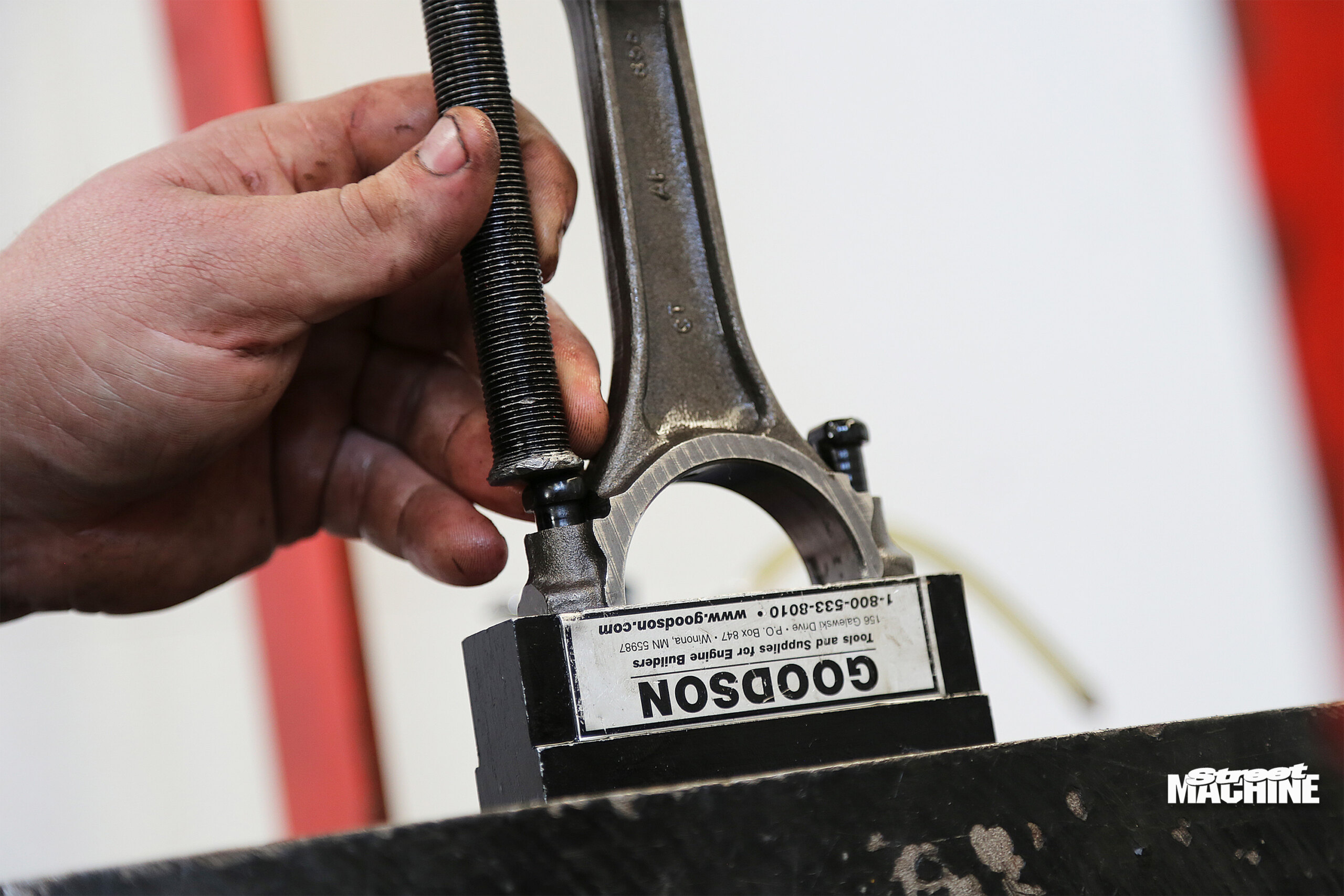
“They’re weak,” he laughs. “Even on a turbo LS that’s making 1000hp, the first thing to go will be a sintered rod.”
Forged conrods are stronger again, as they use a billet of steel or aluminium which is heated to its forging temperature to become malleable. It is then pressed into a die to shape the rod, and this process aligns the molecular structure and grain of the metal, reducing weaknesses from stress points. The rod is then heat-treated and machined into a final product. This laborious manufacturing process is one reason forged rods are typically more expensive than cast ones.
Ensuring the rod is made from the best-quality metal possible is vital, which is why conrod manufacturers often talk about grades of metal, machining processes, and all sorts of nerdery. A connecting rod failure is devastating for your engine, but where an expensive rod made from the best-quality metal may bend into an S (which is less than ideal in itself), a cheaper, lower-quality rod could snap and window your block, destroy the crank and pistons, and cause a fire.
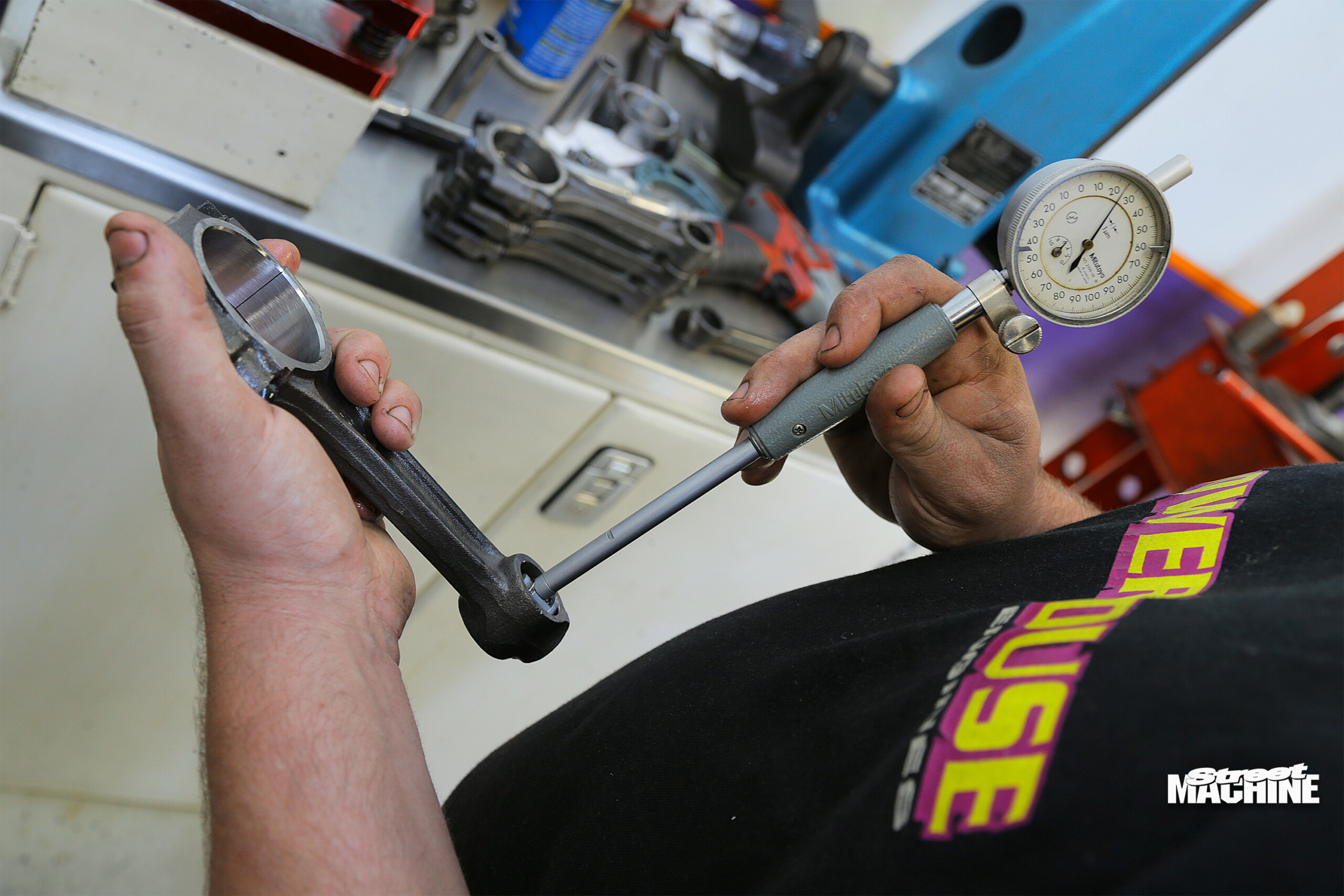
“Metallurgy is where it’s at; it’s all-important for a conrod,” John states. “You need to know what the rod is made out of, because breaking rods is the biggest worry. I’d rather be a little heavy on the rotating assembly than risk the strength.
“When I had my burnout ute going, I built a BBC for myself with an alloy rod, and I turned it to 9000rpm and sat it there. I figured if it broke a rod, I should be able to save the block and crank, so I took the risk. Eventually, when it broke a rod I had to throw the block and crank out!”
SCIENCE TIME
Based in Michigan, Oliver Racing Parts has been making high-end connecting rods for racers for over 43 years. The company has runs on the board in many racing disciplines, from the salt flats of Bonneville to NASCAR and local speedways.

This racing focus makes Oliver a great case study for understanding the engineering that goes into manufacturing a high-quality conrod that’ll handle proper abuse time and time again. All Oliver rods are made from E4340 AQ chrome-moly alloy, double heat-treated and then quenched and tempered to produce 100 per cent martensitic grain structure, which boosts rod strength at a molecular level.
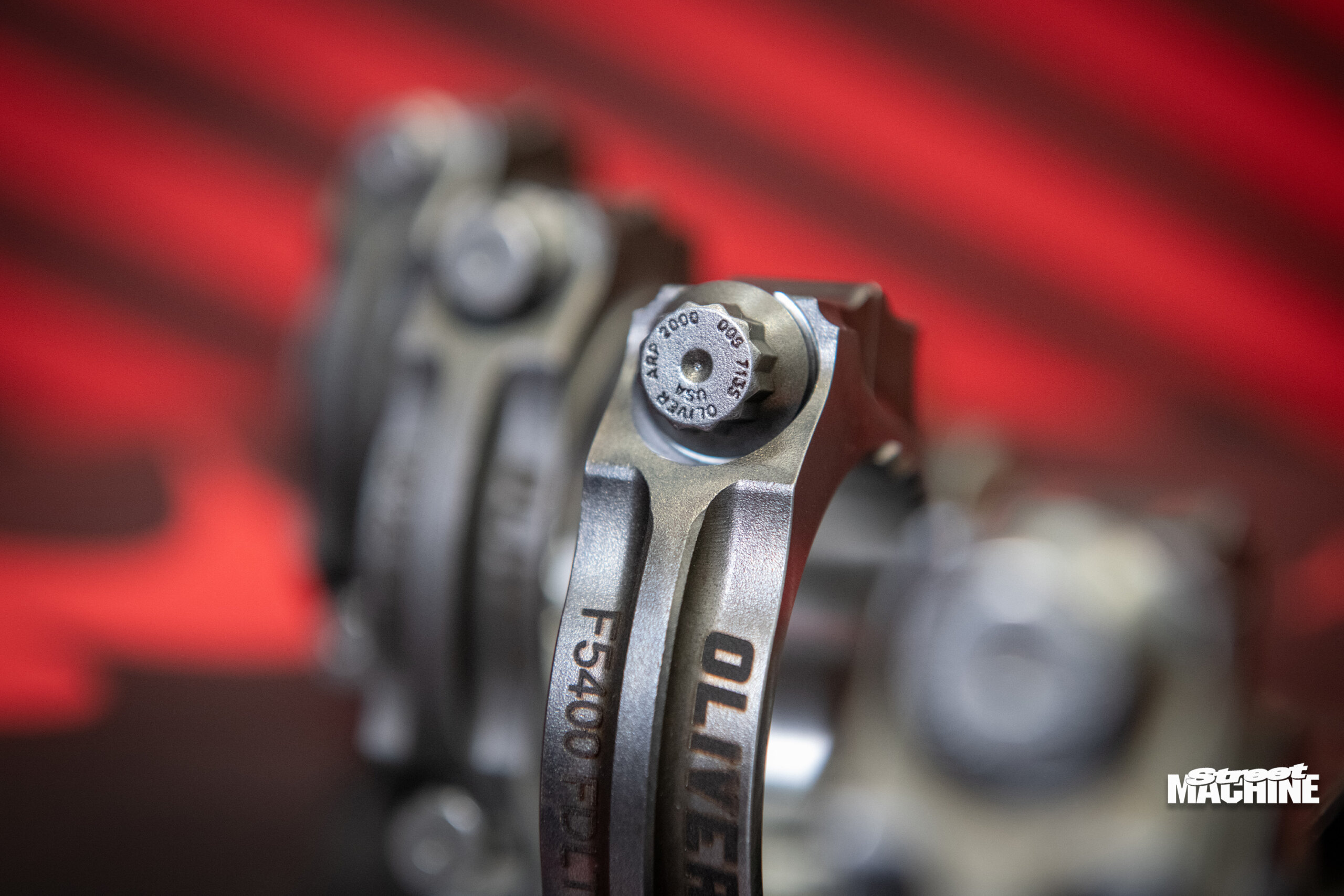
E4340 AQ is claimed to be a higher-grade alloy than regular 4340, and Oliver takes extra steps to ensure its rods will handle what customers throw at them. This includes a stress-relief process after rough machining, as well as AMS2301 degassing in a vacuum furnace to ensure the metal is as clean and therefore as strong as possible.

Oliver conrods’ exclusive Parabolic Beam design is claimed to reduce stress through the length of the conrod while keeping weight low. Oliver says the design offers the highest strength-to-weight ratio of any conrod on the market.
GEOMETRY
With the rise in popularity of stroker crankshafts, and de-stroked combos as well, altering the length of your conrod is becoming more common. Some big-power turbo combos are using a large bore in a short stroke to help the engine rev harder, but John advises against getting too fancy.
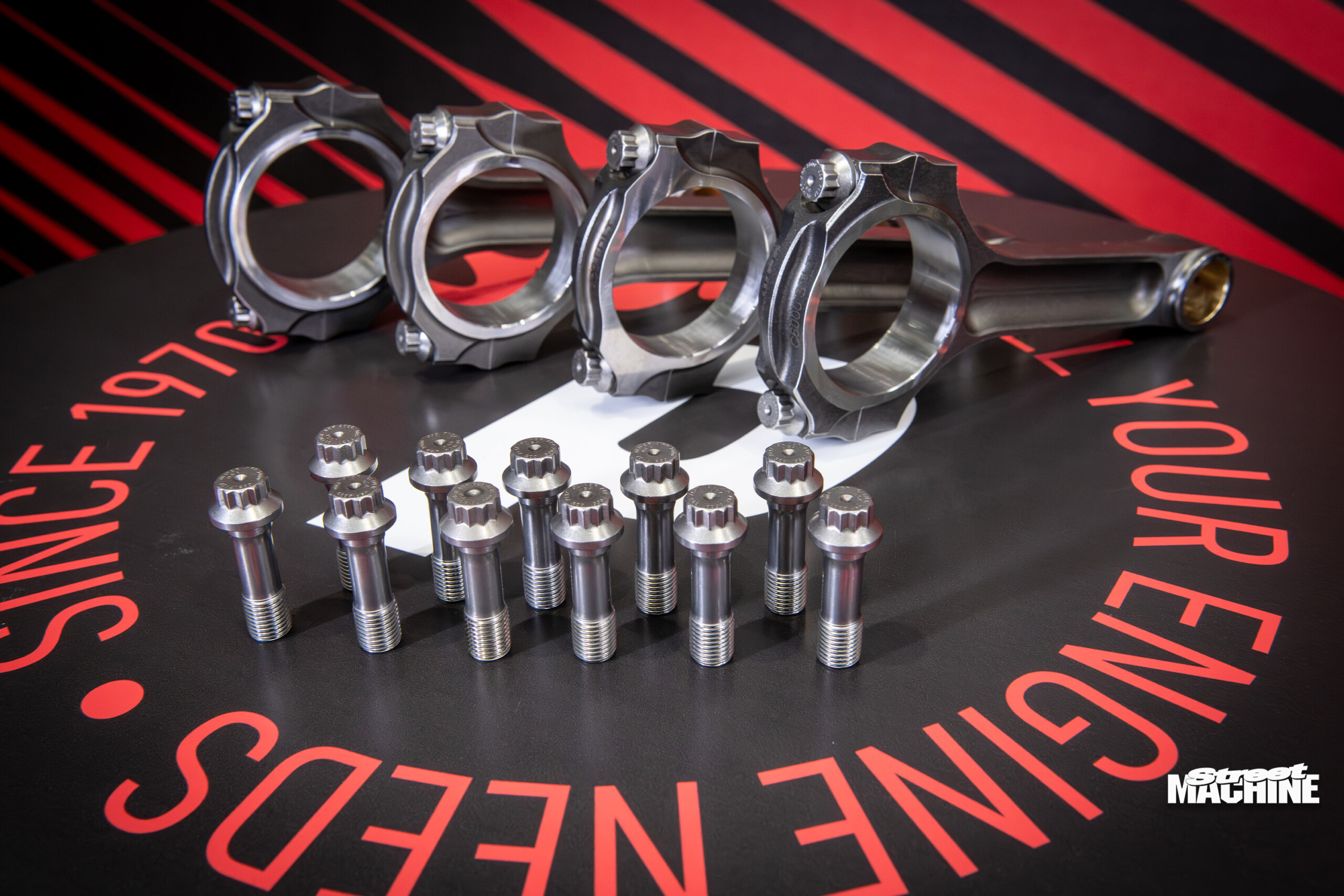
dog 7/16in bolts has been eased lately thanks to ARP offering 3/8in bolts in high-tech super-alloy materials that radically increase clamp-force limits. Even so, engines making big boost or spinning to high-rpm will likely need the security of the bigger fasteners
“You need to look at what you want to achieve with the engine, because there isn’t a huge range of different conrod lengths available off-the-shelf,” he says. “Some companies have more range in stock for different lengths and weights, but normally, the off-the-shelf rods are all pretty similar. Anything outside that is a custom order, which costs a lot more and takes a lot longer to source.”
John says there are often good compromises to be found among manufacturers’ off-the-shelf parts inventories, such as using Chev rods and pistons in a Holden 355ci stroker. “Some of those off-the-shelf rod lengths can work well in a combo with a little work, or changing the spec of a piston,” he says. “In the end, you need to go with an in-stock conrod if you need to put something together quickly, as is sometimes the case.”
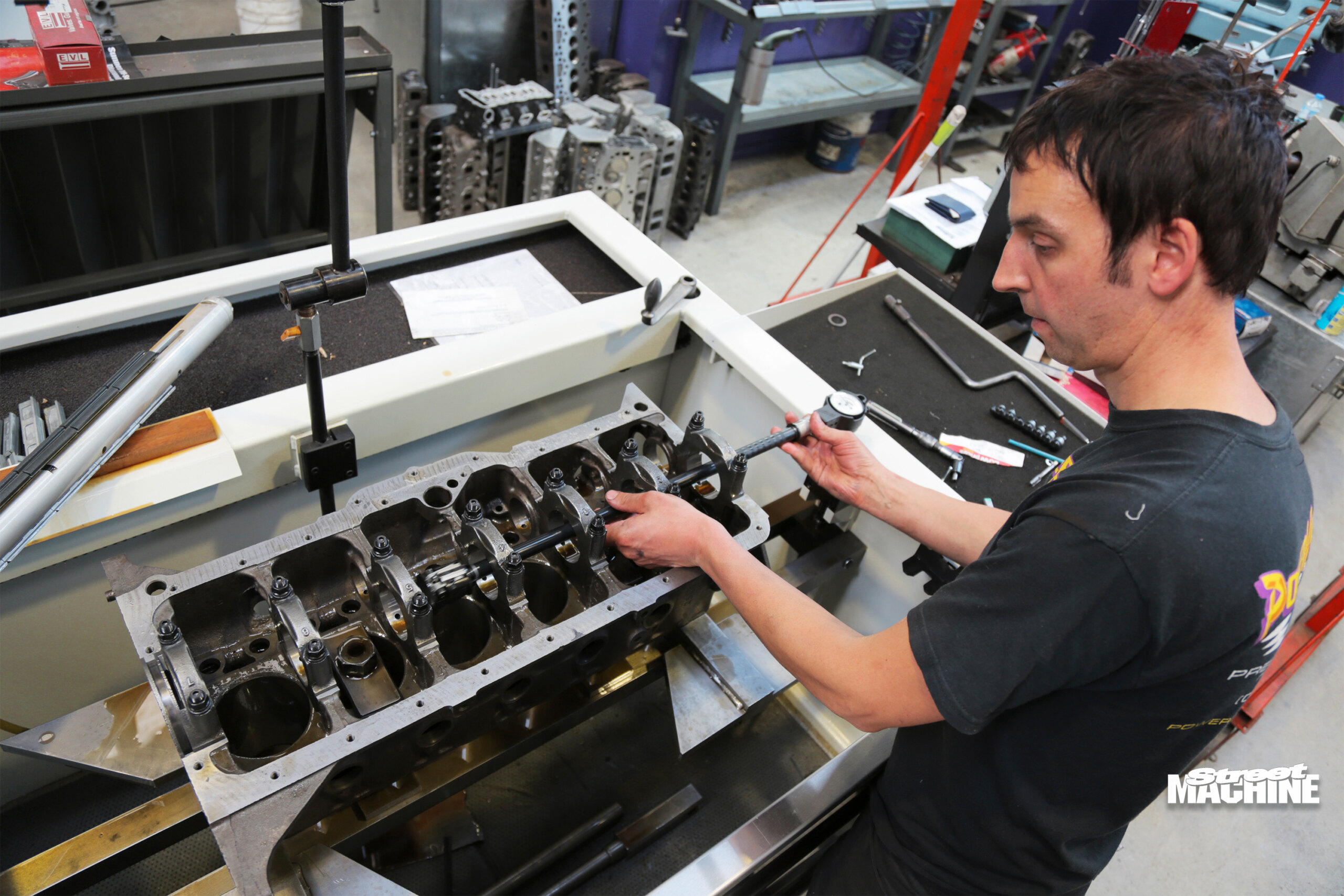
If you’re putting the engine together yourself and you’ve chosen a stroker crank, you should trial-fit components to check if the big ends of the conrods will clear the block. Often the block will need clearancing so the conrods can swing through the stroker’s larger reciprocating arc compared to the factory crank.